
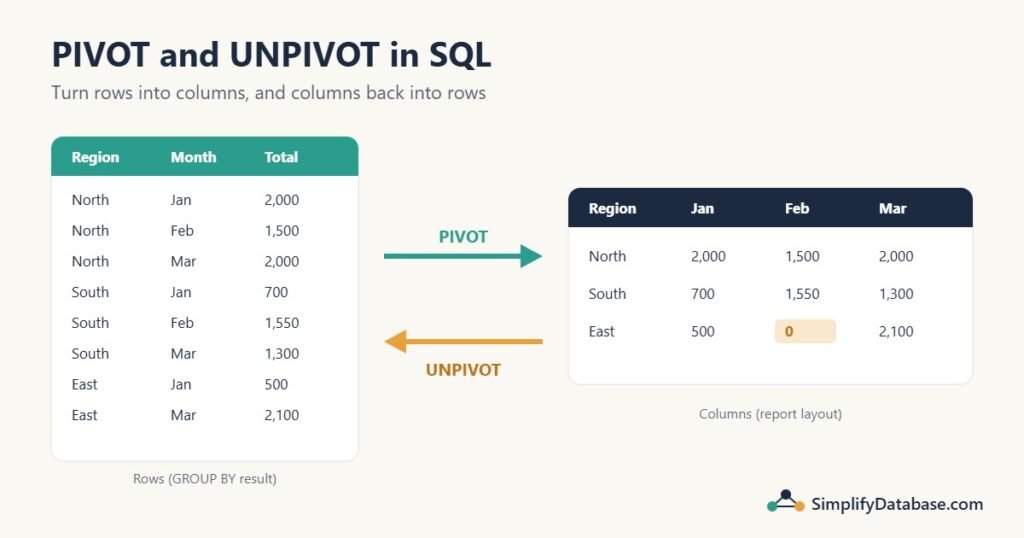
PIVOT and UNPIVOT in SQL Server: Turn Rows into Columns (and Back)
How to turn rows into columns in SQL: conditional aggregation that works everywhere, the SQL Server PIVOT operator, dynamic pivot, and two ways to unpivot (without losing NULLs).
How to turn rows into columns in SQL: conditional aggregation that works everywhere, the SQL Server PIVOT operator, dynamic pivot, and two ways to unpivot (without losing NULLs).
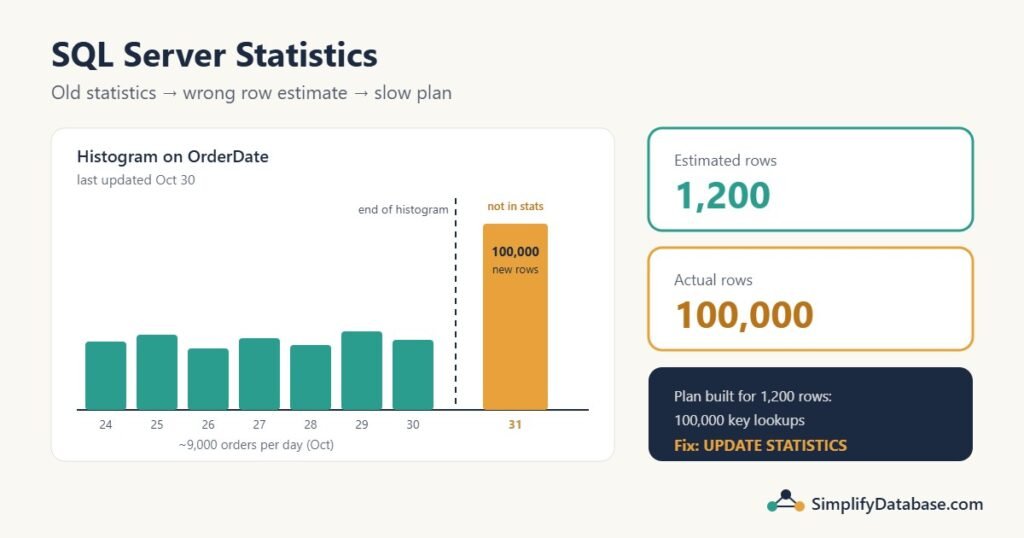
Why a query suddenly gets slow after a data load: how SQL Server statistics work, how to compare estimated and actual rows, check when stats were last updated, and keep them fresh.
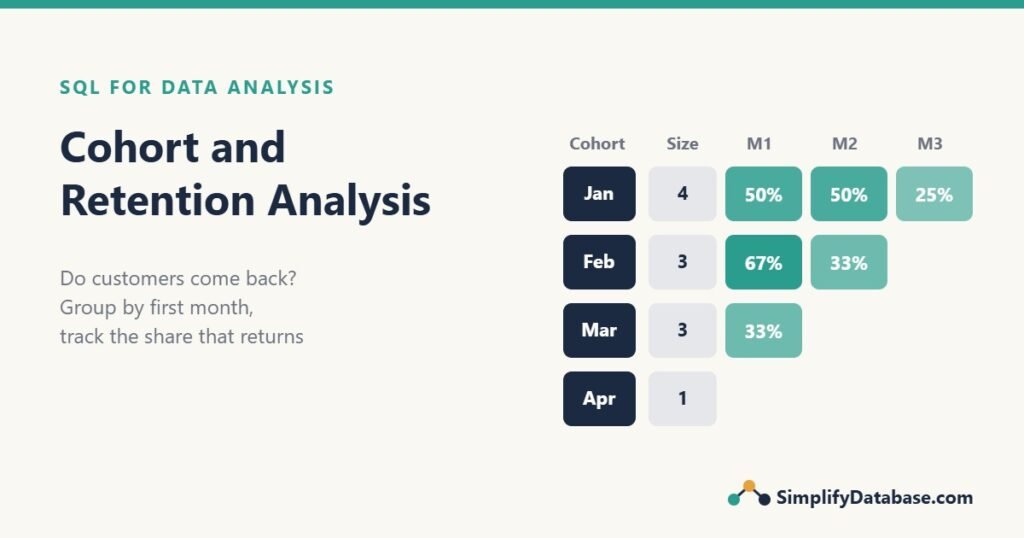
Group customers by the month they first bought and track how many come back. Build a retention triangle in SQL Server and MySQL, step by step.
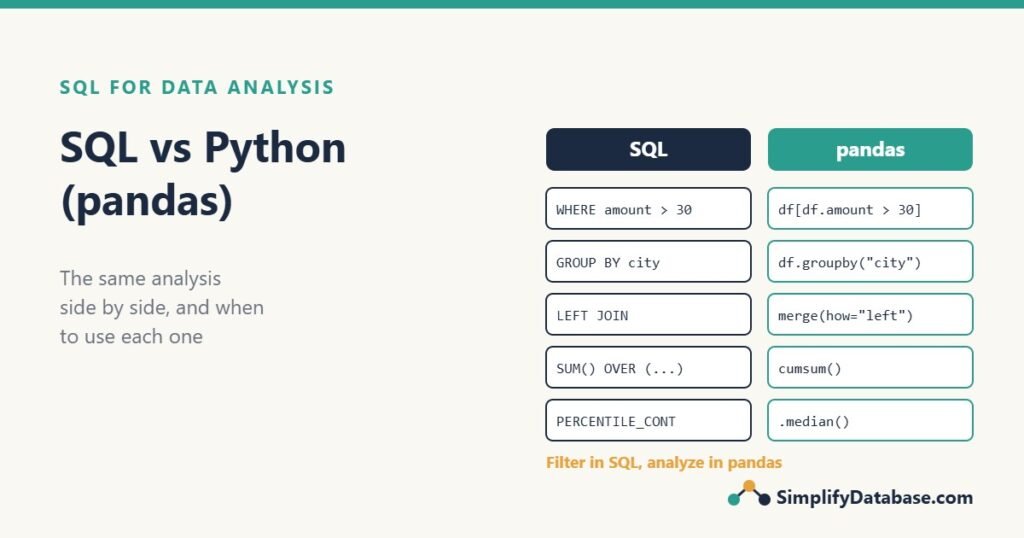
The same analysis in SQL and pandas side by side, a cheat sheet that maps one to the other, where each is stronger, and how analysts use both together.
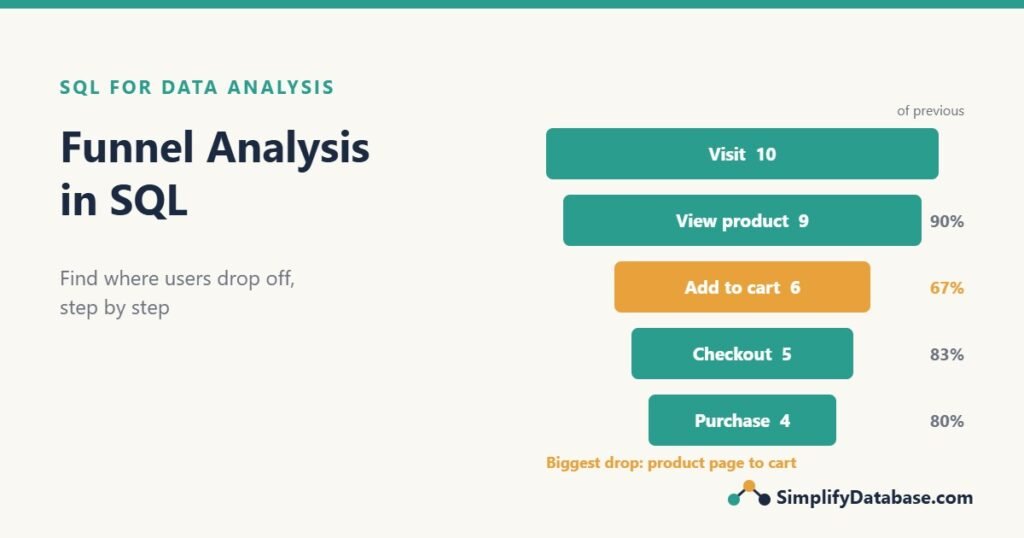
Build a conversion funnel in SQL: count users per step, enforce step order, calculate drop-off with LAG, add a conversion window and compare mobile vs desktop.
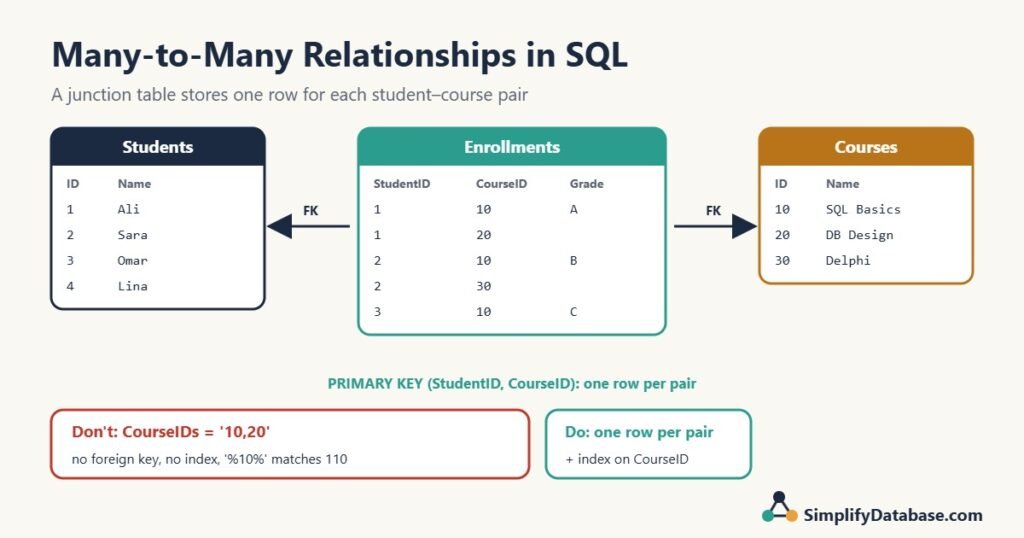
How to store many-to-many relationships in SQL with a junction table: composite keys, foreign keys, indexes, queries and the comma-list mistake.
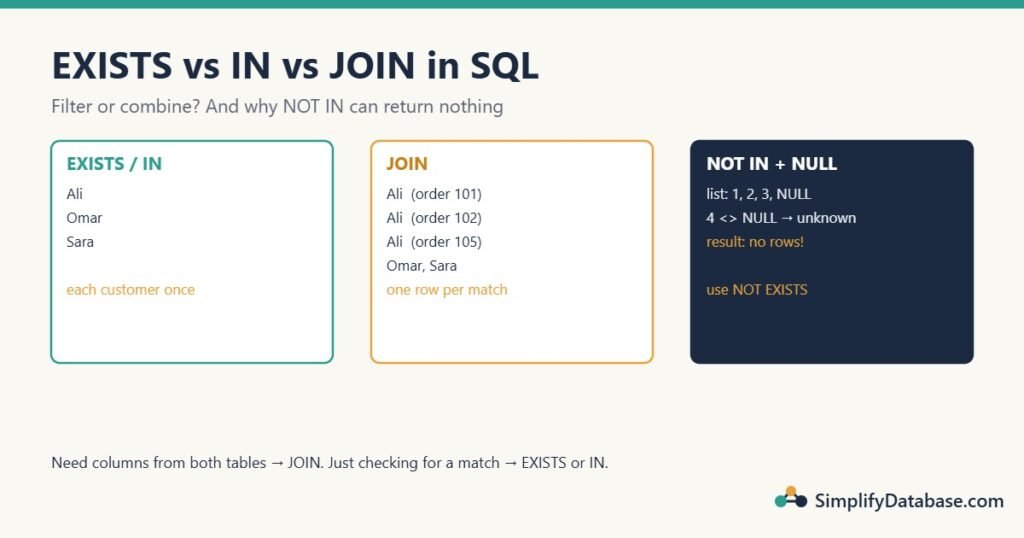
The same question answered with EXISTS, IN and JOIN: when each one is right, why JOIN can duplicate rows, the NOT IN NULL trap, and what really matters for speed.
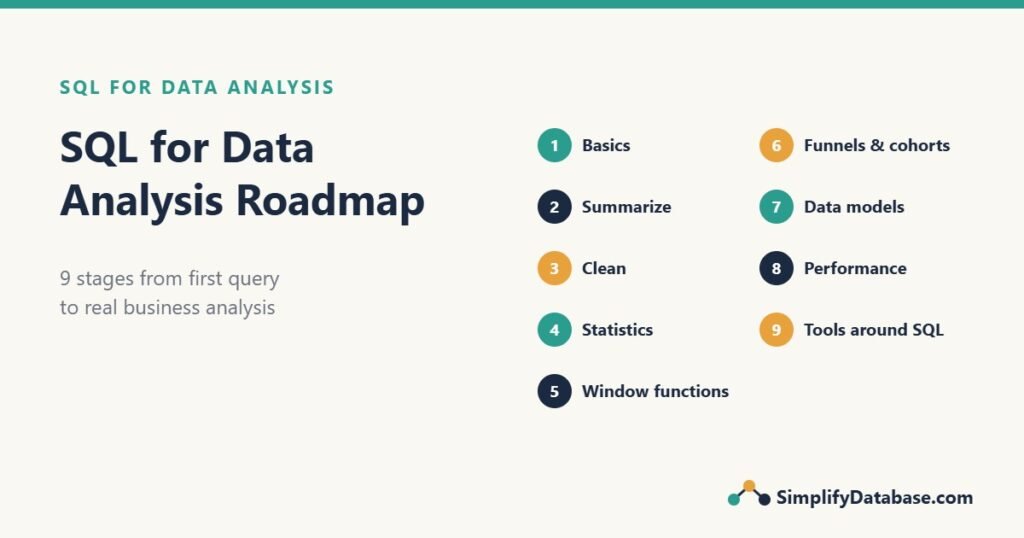
What to learn, in what order, to use SQL for real data analysis: 9 stages with free tutorials, an 8-week study plan and a first portfolio project.
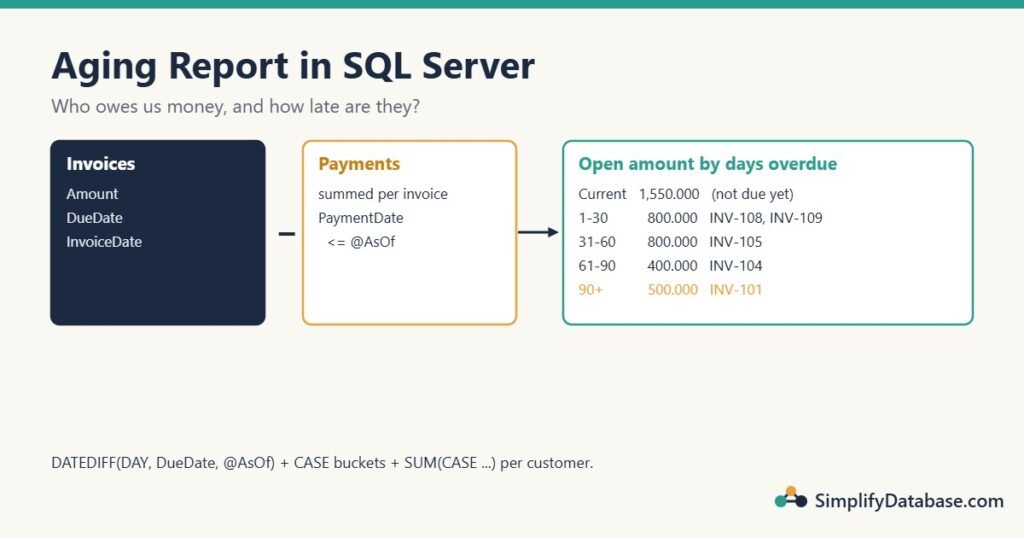
Build an accounts receivable aging report in SQL Server step by step: open amount per invoice, days overdue, aging buckets per customer, totals, and common mistakes.
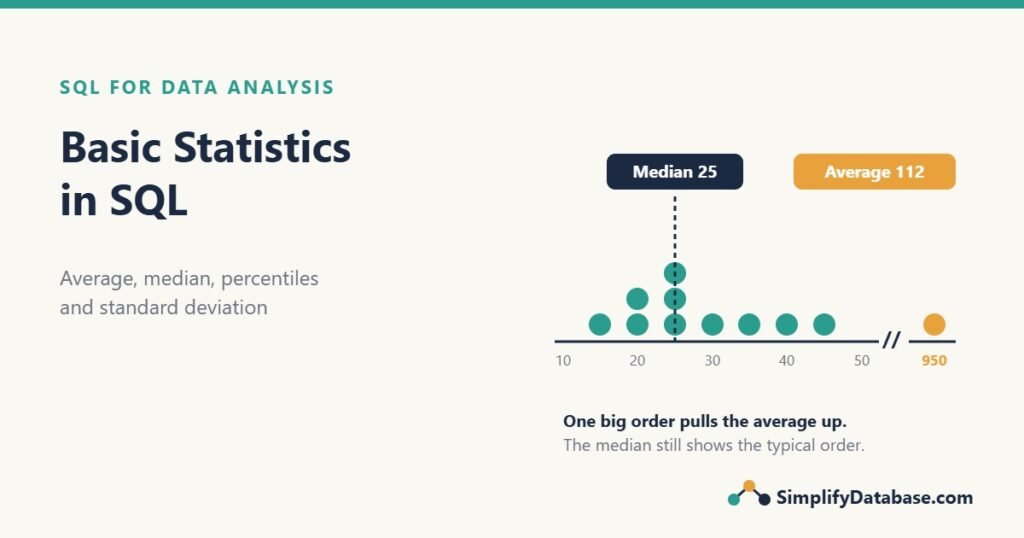
Calculate averages, medians, percentiles, mode and standard deviation in SQL Server and MySQL, find outliers, and learn which number to report.