
SQL Performance Explained Review: The Best Book on Indexes?
An honest review of SQL Performance Explained by Markus Winand: what it teaches about indexes, who it is for, and whether to buy the book or read it free online.
An honest review of SQL Performance Explained by Markus Winand: what it teaches about indexes, who it is for, and whether to buy the book or read it free online.
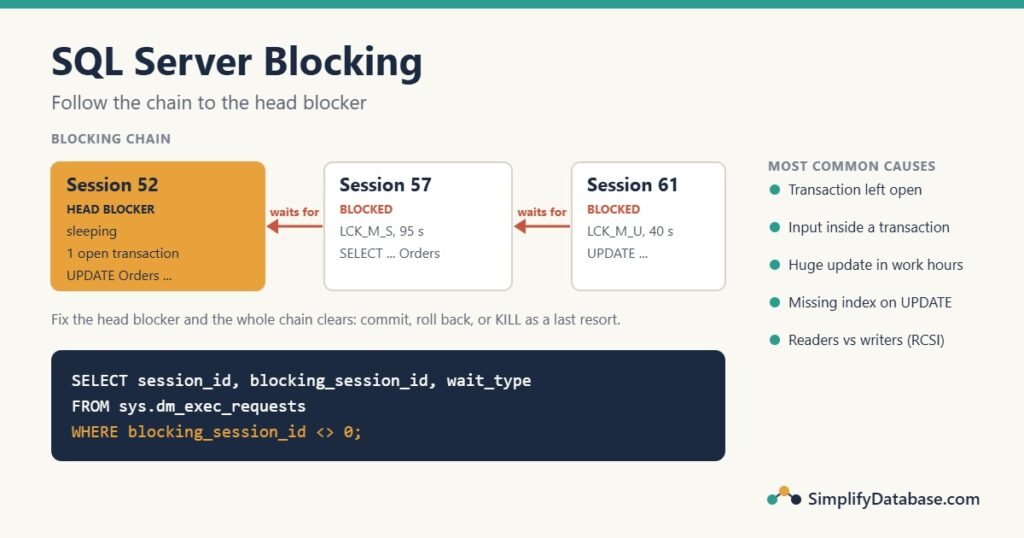
How to find blocking in SQL Server in under a minute: the DMV queries that show who is waiting and who the head blocker is, what to do right now, and how to stop blocking from coming back.
The best books for SQL performance tuning: indexes, execution plans and troubleshooting slow SQL Server queries. Two of them are free ebooks.
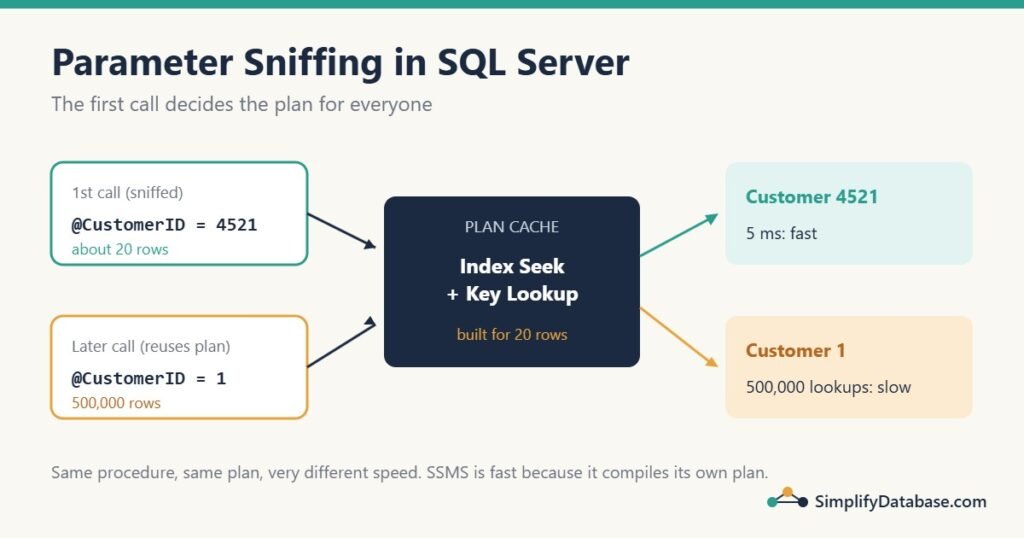
Why the same SQL Server procedure is fast for one value and painfully slow for another, or fast in SSMS but slow in your application, how to confirm it is parameter sniffing, and six fixes with when to use each.
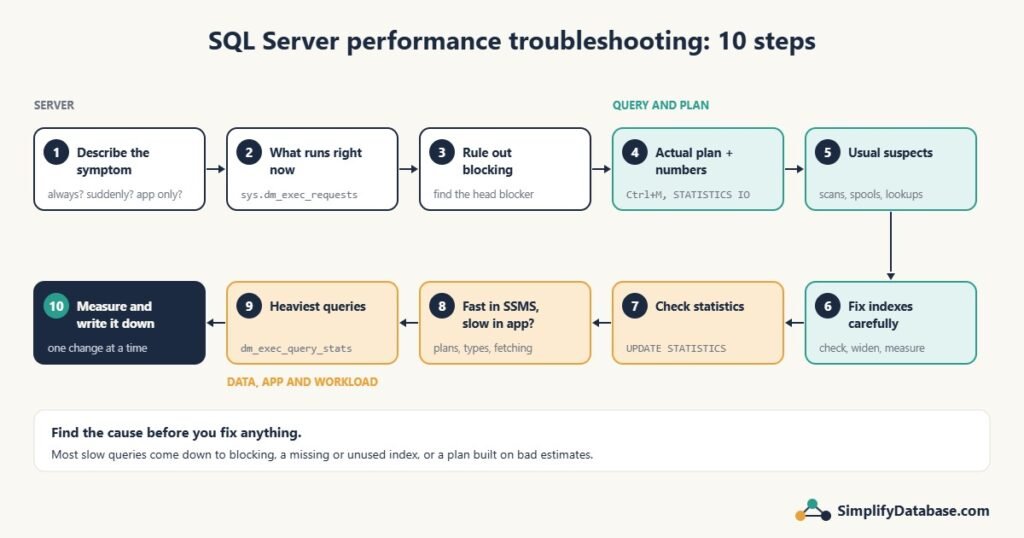
A practical, step-by-step process for slow SQL Server queries: describe the symptom, check what’s running and blocking, read the plan, fix indexes and statistics, and measure the result.
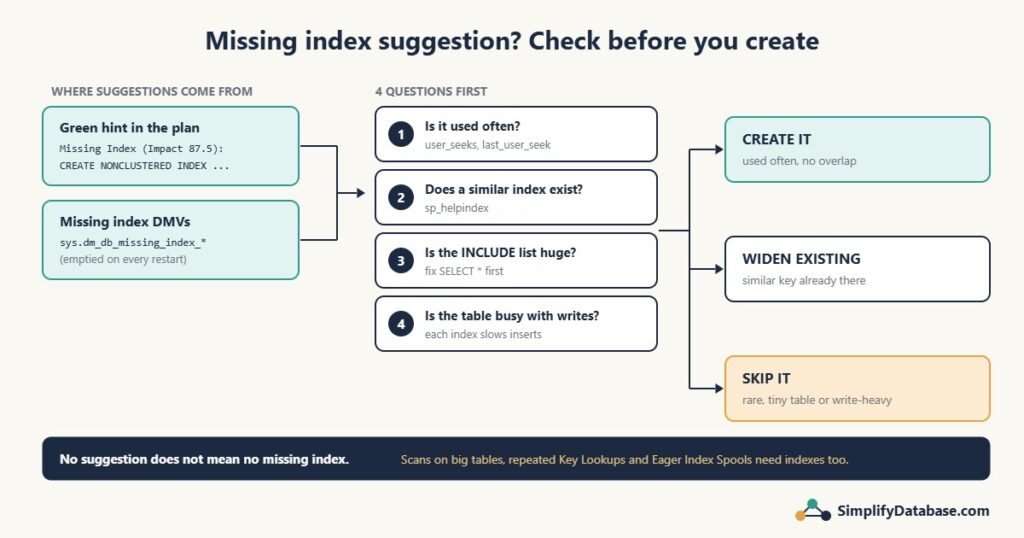
SQL Server suggests missing indexes in the execution plan and the DMVs, but copying them blindly creates duplicates and slows writes. Here’s how to find them, read them, and decide.
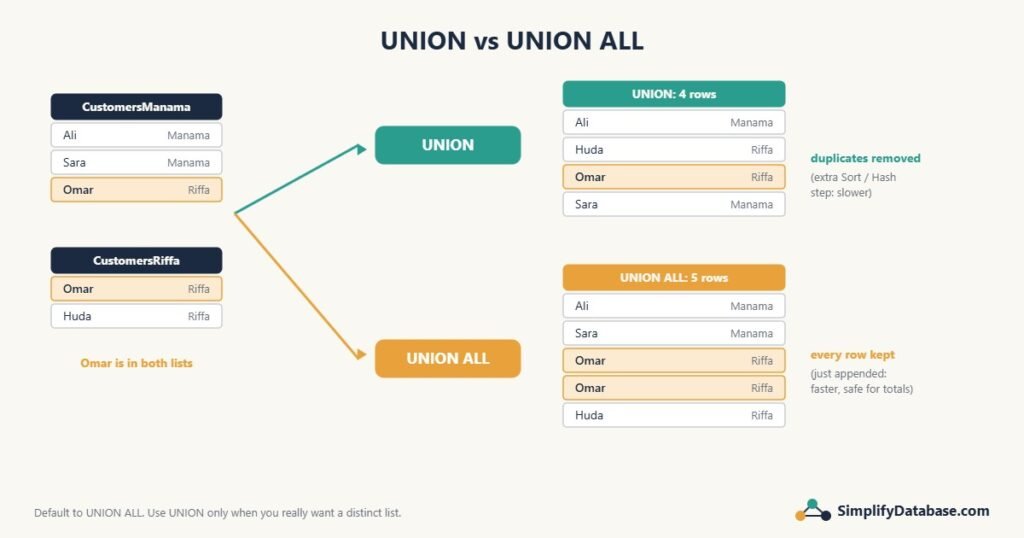
UNION removes duplicates, UNION ALL keeps every row and is faster. Learn when to use each, the rules every UNION must follow, and the trap that can make your totals wrong.
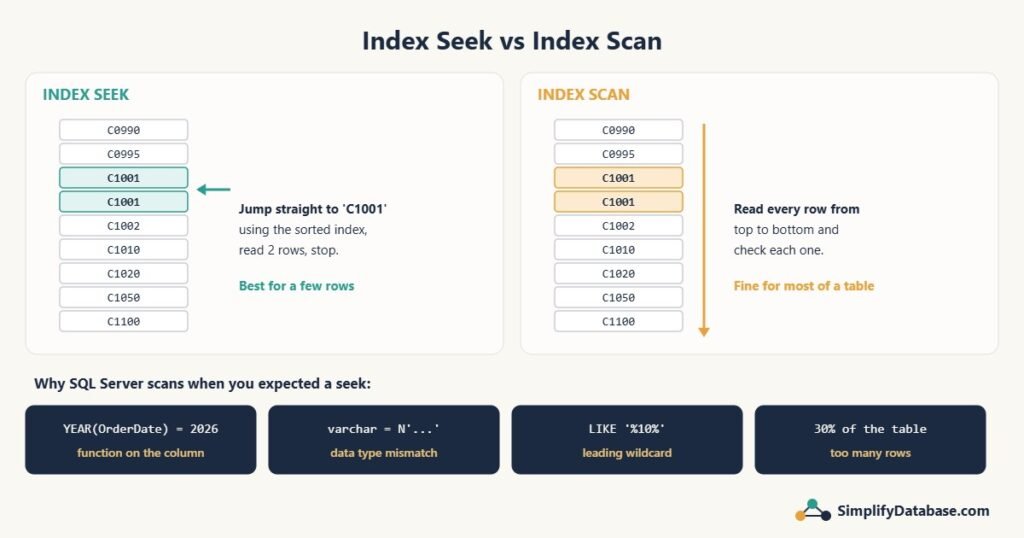
You created an index but SQL Server still scans the table. Here are the 8 most common reasons, from functions on columns to implicit conversions, with the fix for each.
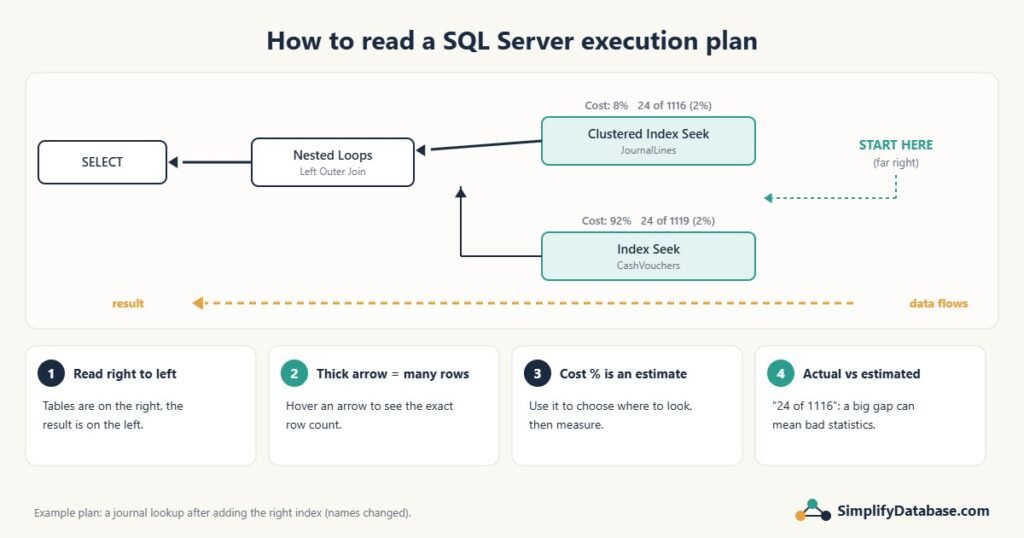
Execution plans look confusing at first. Learn to read a SQL Server plan step by step: right to left, arrow thickness, cost percentages, the operators that matter, and a real example.
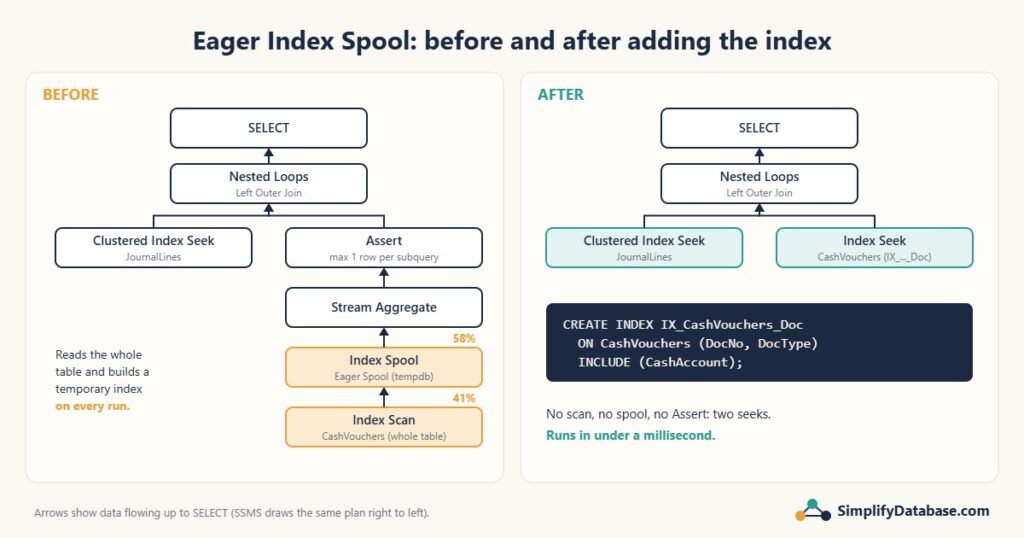
Seeing an Index Spool (Eager Spool) in your SQL Server execution plan? Here is what it means, why SQL Server builds a temporary index on every run, and the one index that makes it disappear.