
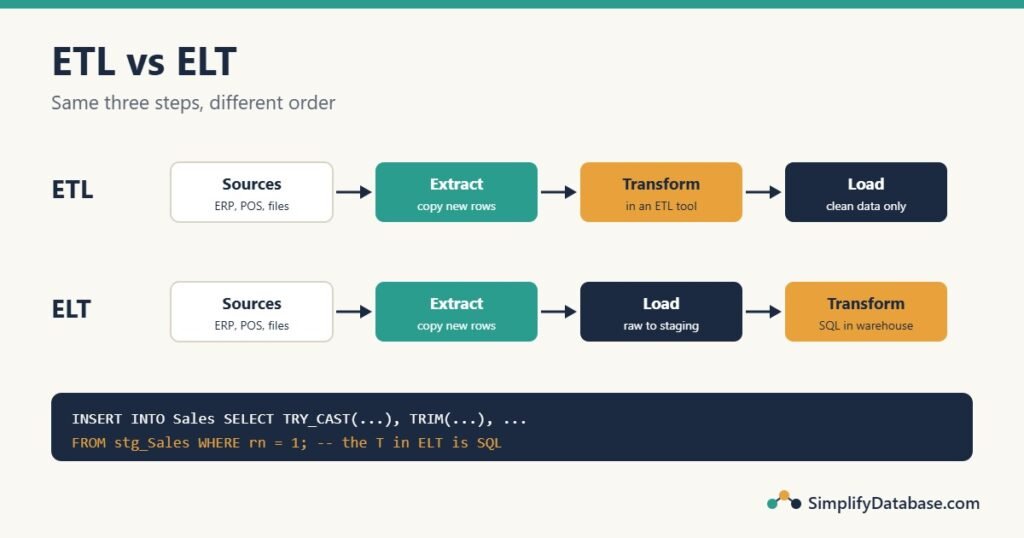
ETL vs ELT Explained Simply (With a SQL Transform Example)
What ETL and ELT mean, how they differ, what the transform step looks like in real SQL, full vs incremental loads, and which approach to choose for your data warehouse.
What ETL and ELT mean, how they differ, what the transform step looks like in real SQL, full vs incremental loads, and which approach to choose for your data warehouse.
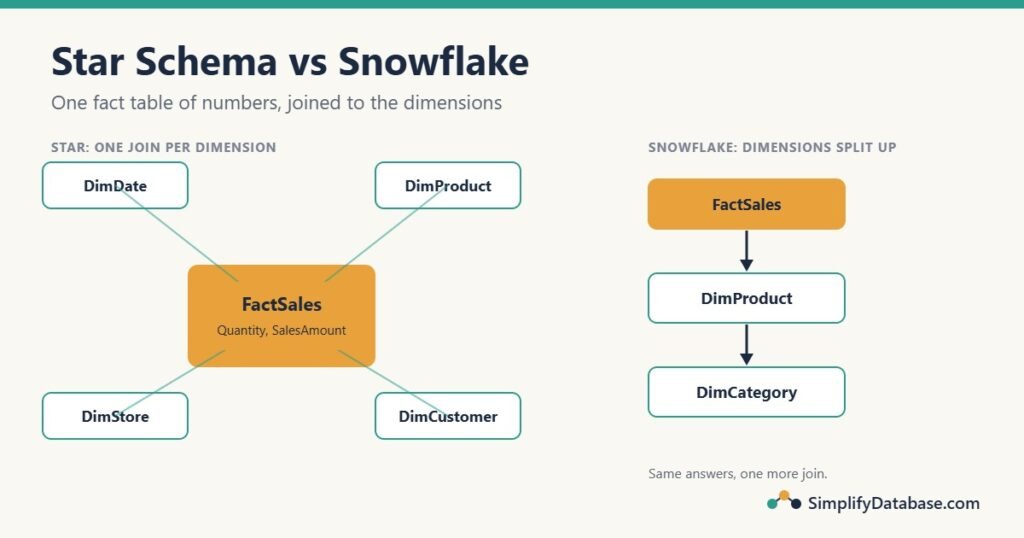
What a star schema is, how fact and dimension tables work, how to query them with plain SQL, how the snowflake schema differs, and which one to choose for your data warehouse.
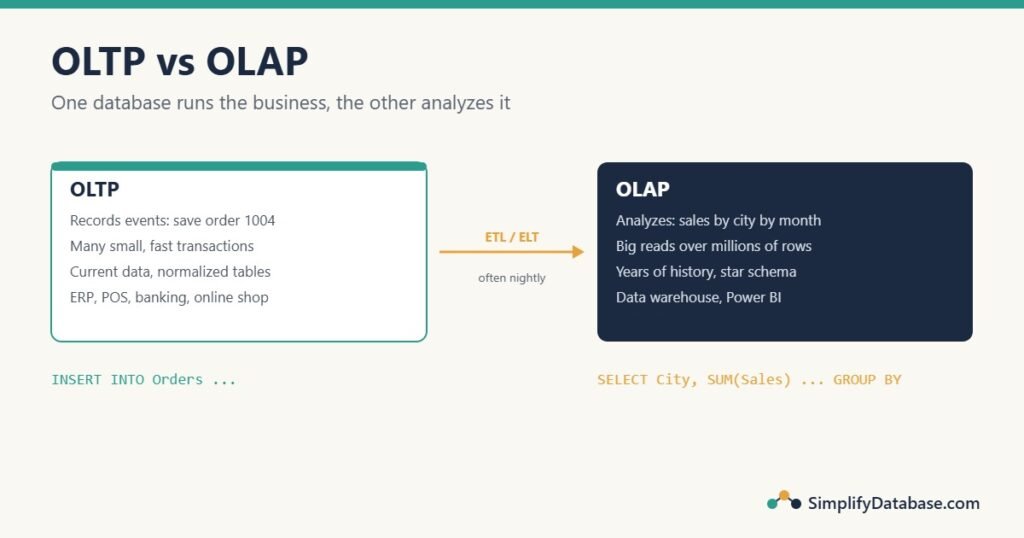
What OLTP and OLAP mean, how they differ, why heavy reports slow down a live database, and how data moves from one to the other, explained in plain English with SQL examples.
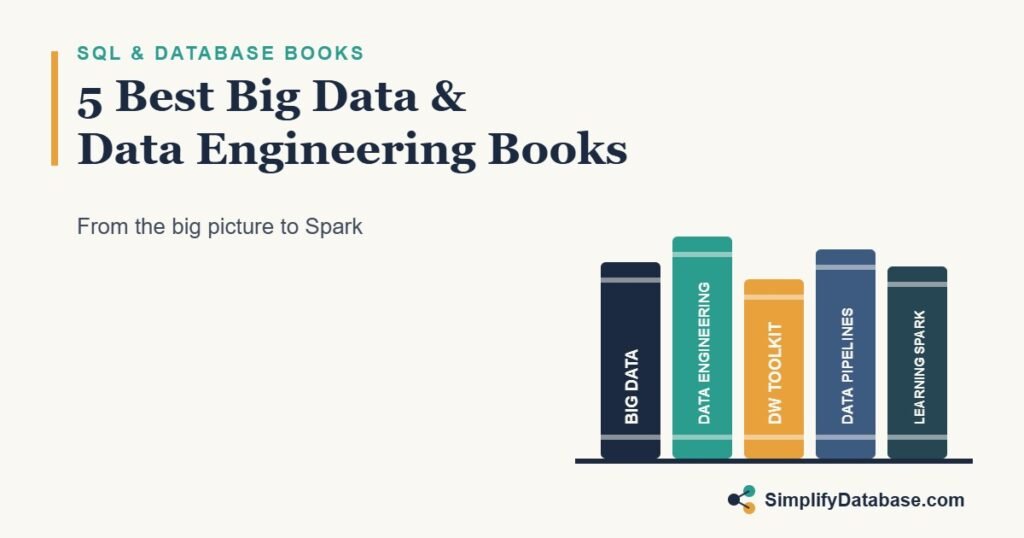
The best books on big data, data warehousing and data engineering for people who already know SQL, from Fundamentals of Data Engineering to Learning Spark.
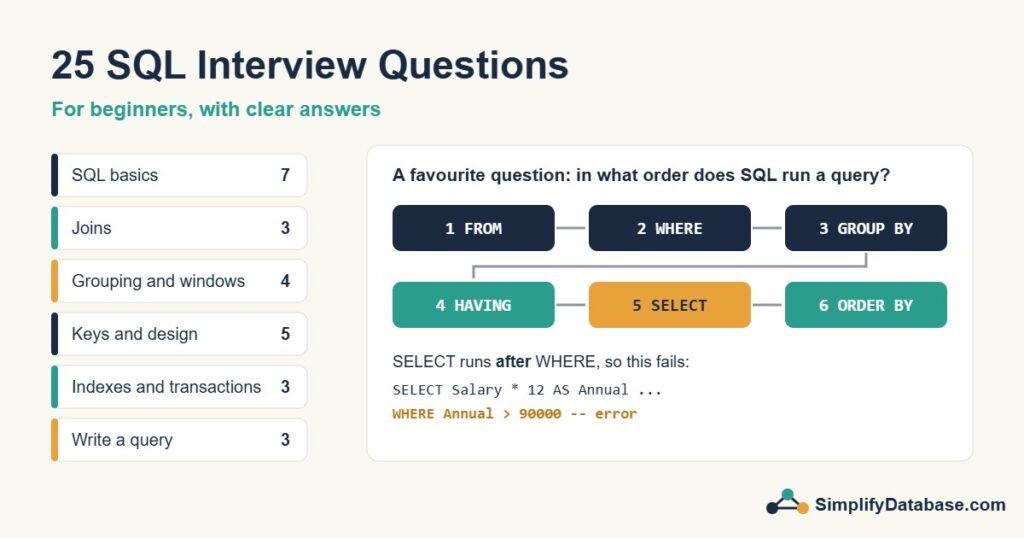
25 SQL interview questions that come up again and again for junior roles, with short answers you can say out loud: joins, GROUP BY, NULL, keys, indexes, ACID, and three classic write-a-query tasks.
The best books for SQL performance tuning: indexes, execution plans and troubleshooting slow SQL Server queries. Two of them are free ebooks.
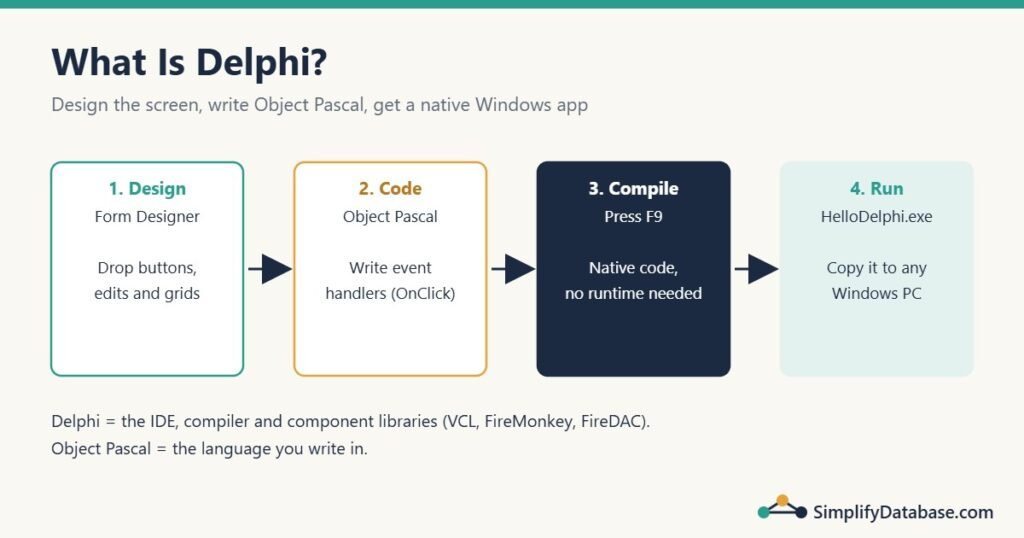
A beginner’s guide to Delphi: what it is, what it’s used for, how to install the free Community Edition, and how to build your first Windows app step by step.
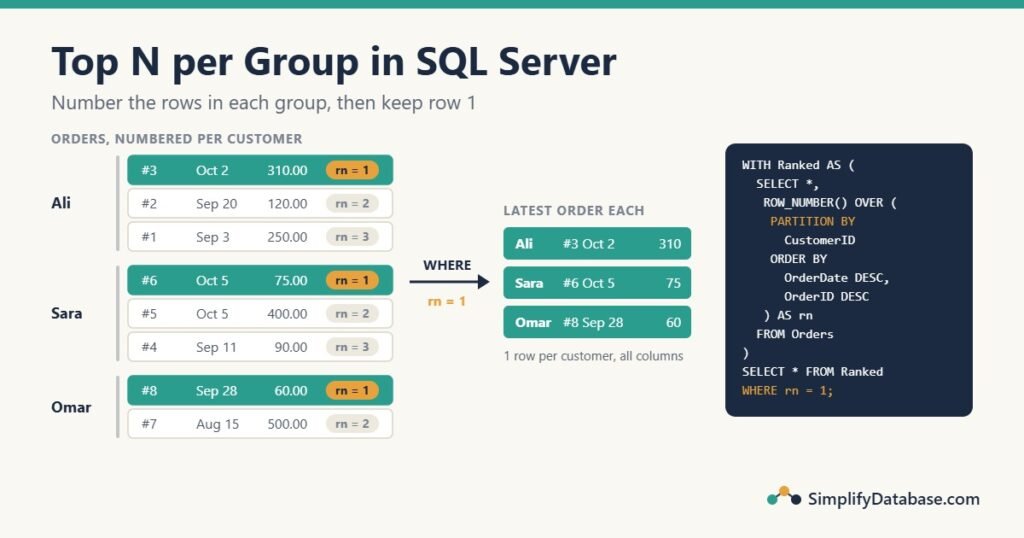
How to get the latest record or the top N rows for each group in SQL Server with ROW_NUMBER(), handle ties correctly, and when CROSS APPLY or WITH TIES is the better choice.
An honest review of Itzik Ben-Gan’s T-SQL Fundamentals, 4th edition: what it covers, who it is for, its strengths and weaknesses, and whether you should buy it.
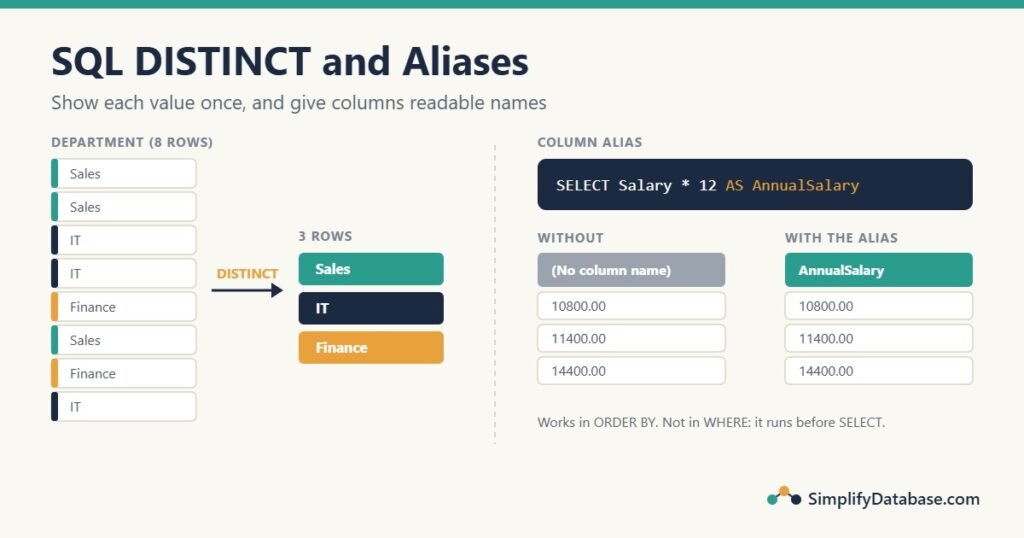
How SQL DISTINCT removes duplicate rows (and why it applies to every selected column), how it treats NULL, COUNT(DISTINCT), and how to use column and table aliases, including why an alias works in ORDER BY but not in WHERE.