
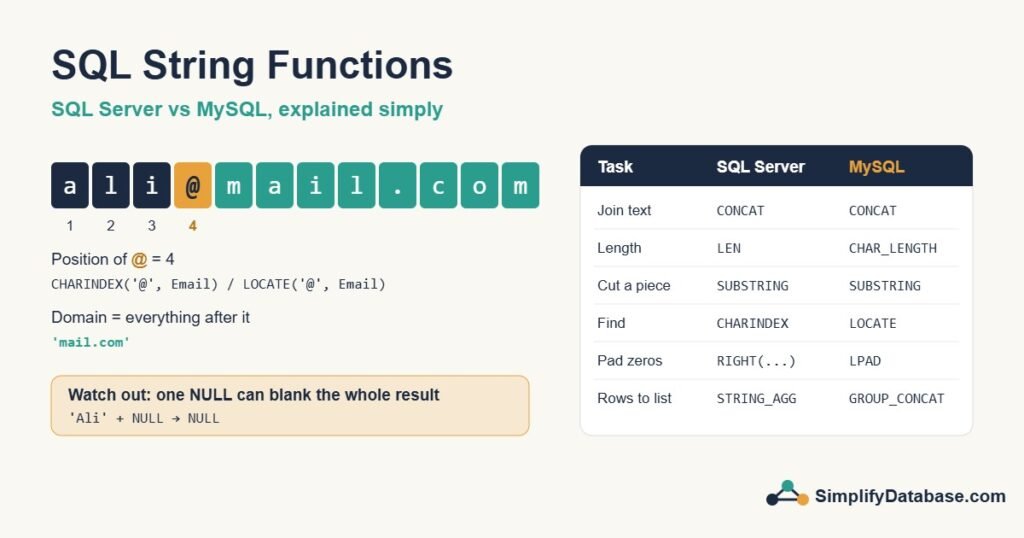
SQL String Functions Explained Simply (SQL Server and MySQL)
The SQL string functions you’ll use most in SQL Server and MySQL: CONCAT, LEN, TRIM, SUBSTRING, CHARINDEX, REPLACE and STRING_AGG, plus the NULL trap that blanks whole results.
The SQL string functions you’ll use most in SQL Server and MySQL: CONCAT, LEN, TRIM, SUBSTRING, CHARINDEX, REPLACE and STRING_AGG, plus the NULL trap that blanks whole results.
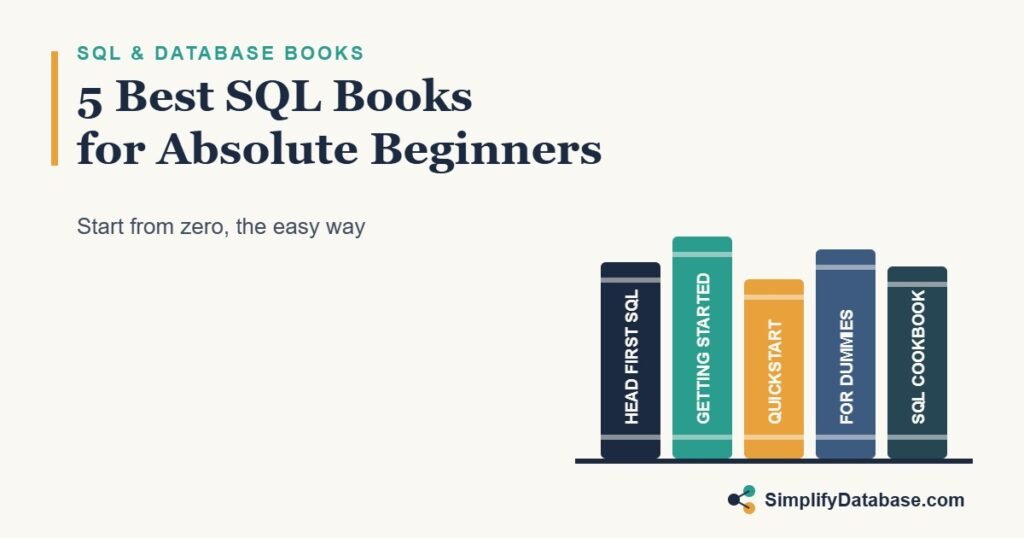
Never written a query? These five SQL books are written for complete beginners, from the visual Head First SQL to the hands-on SQL Cookbook.
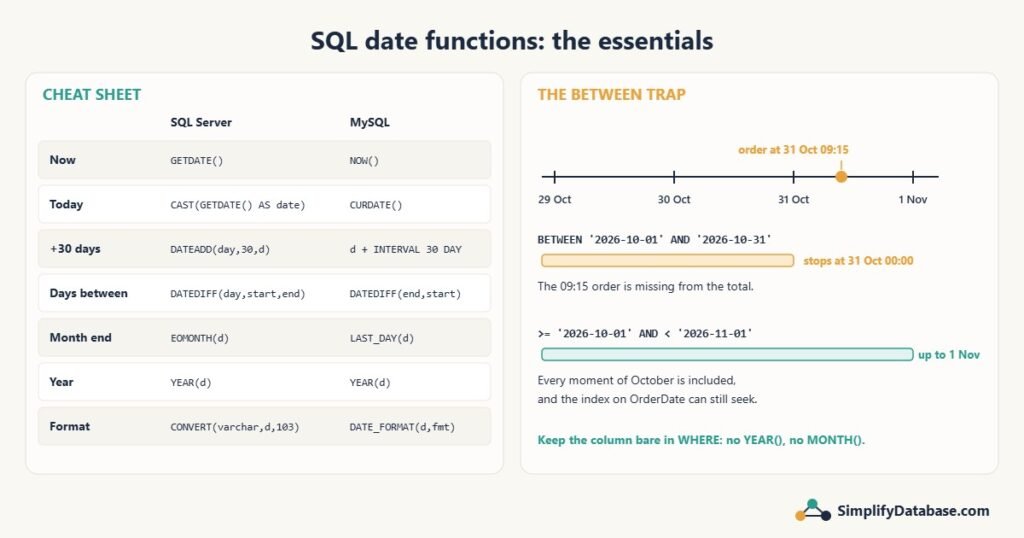
The date functions you’ll use most in SQL Server and MySQL: current date, DATEADD, DATEDIFF, month end and formatting, plus the BETWEEN mistake that makes monthly totals wrong.
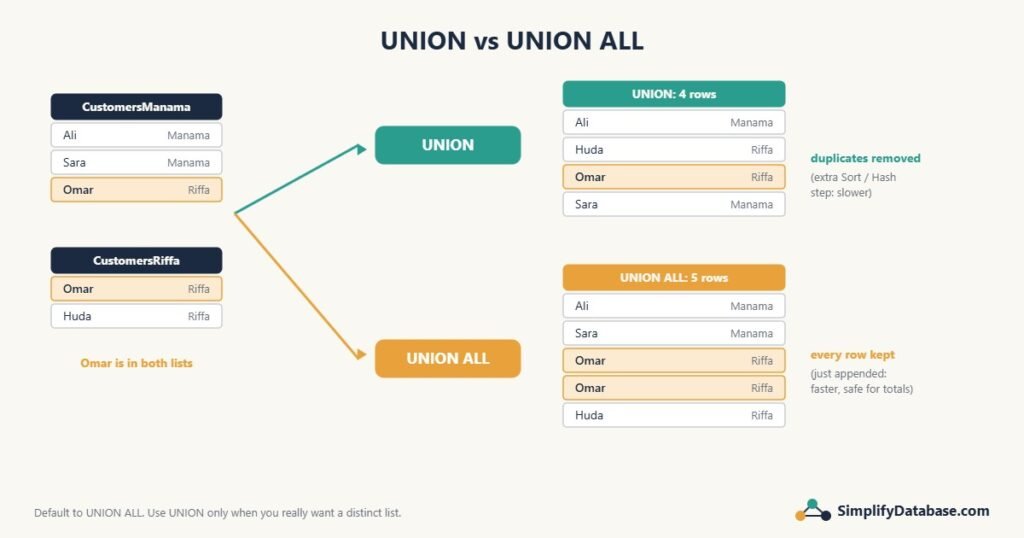
UNION removes duplicates, UNION ALL keeps every row and is faster. Learn when to use each, the rules every UNION must follow, and the trap that can make your totals wrong.
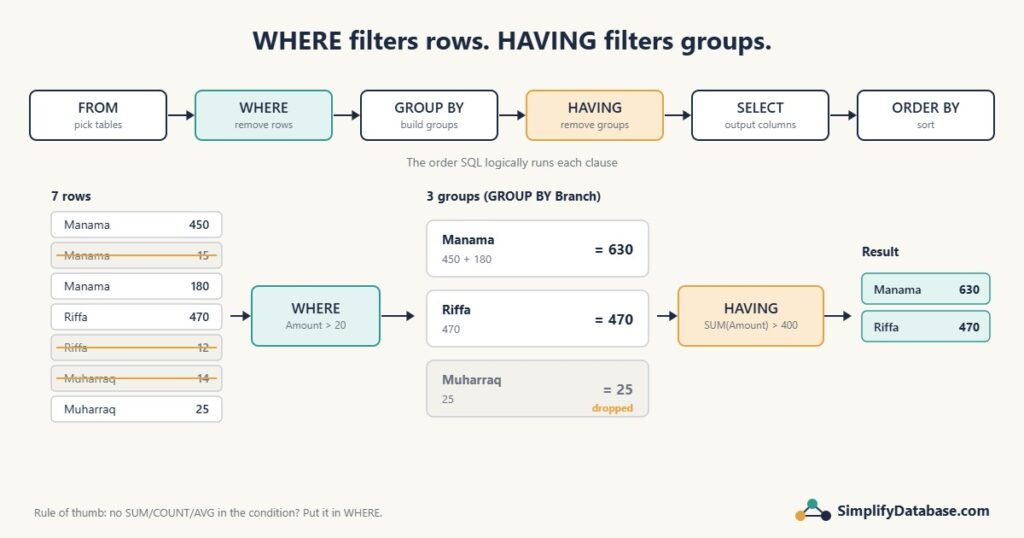
WHERE filters rows before grouping. HAVING filters groups after GROUP BY. See the difference with a simple sales example, the logical query order, and common mistakes.
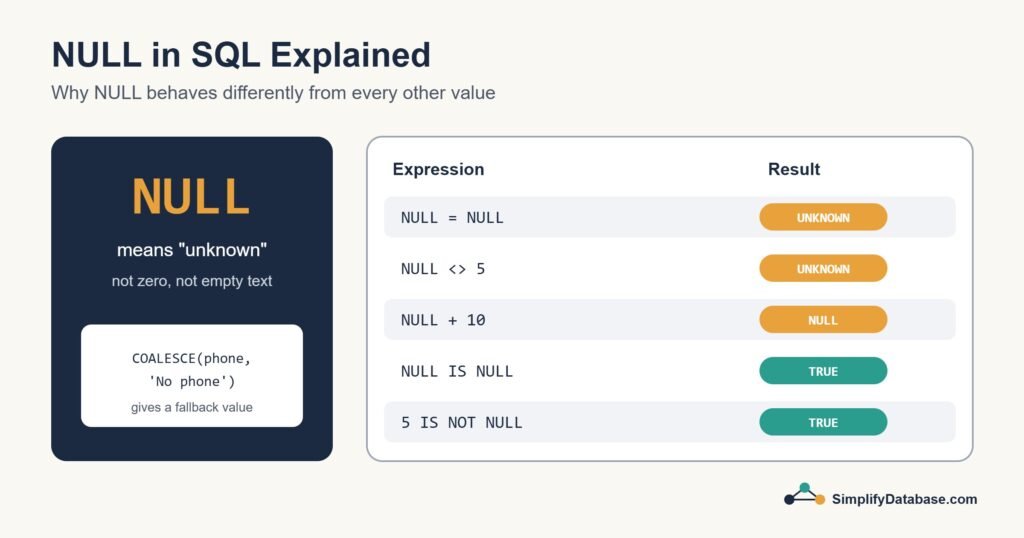
Understand what NULL means in SQL, why = NULL never works, and how to handle missing values with IS NULL, COALESCE and NULLIF.
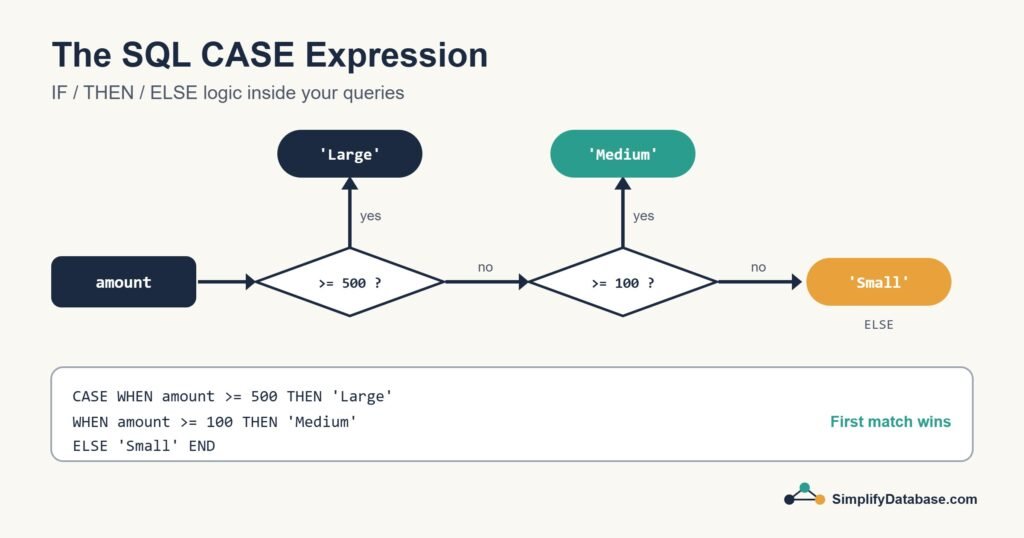
Learn how to use the SQL CASE expression for if/then/else logic: labels, conditional counts, custom sorting and more, with simple examples.
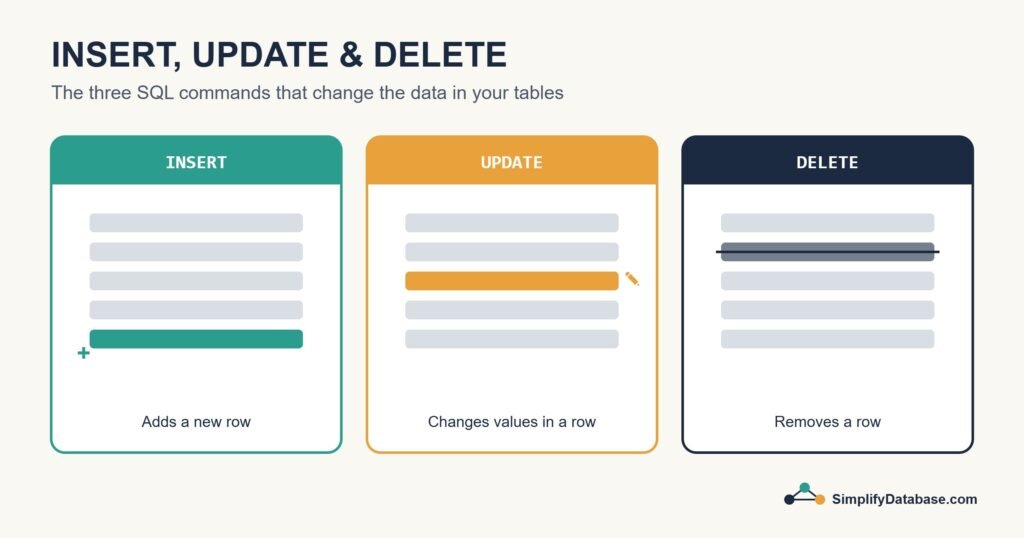
Learn how to add, change and remove data in SQL with INSERT, UPDATE and DELETE, plus the safety habits that stop costly mistakes.
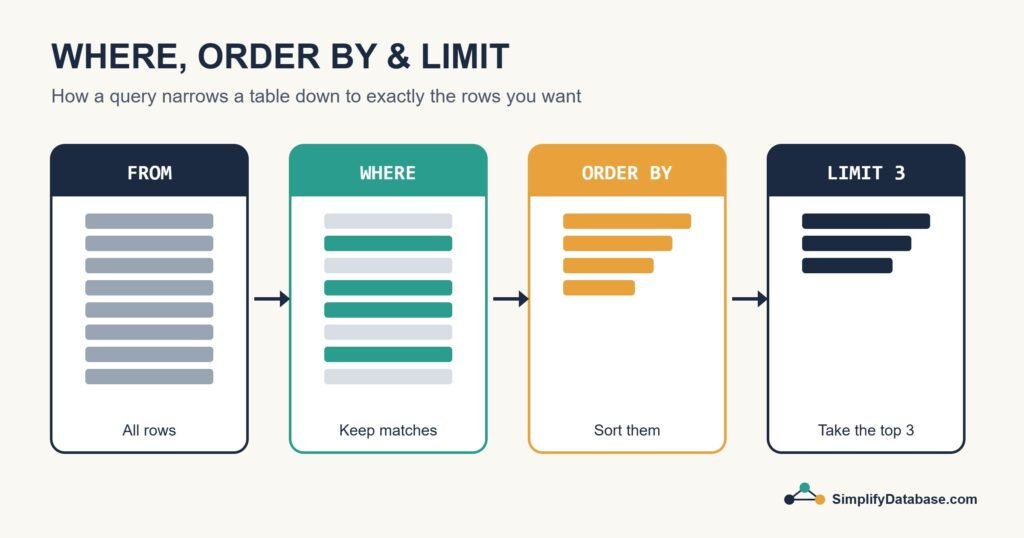
Learn how to filter, sort and limit query results in SQL with WHERE, ORDER BY and LIMIT, using simple real-world examples.
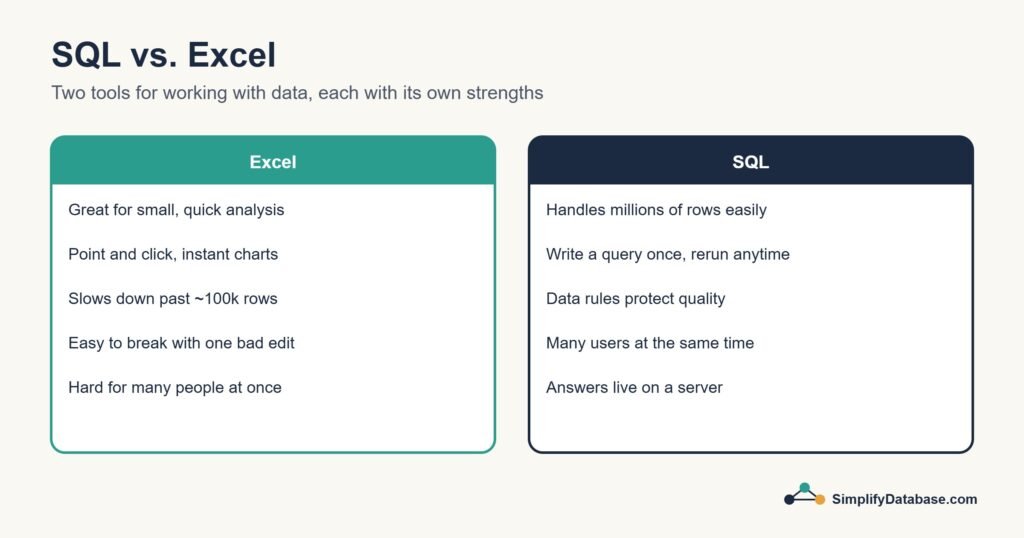
If you’ve ever worked with data, you’ve probably used Excel. It’s familiar, visual, and gets the job done for a